ForPeat training: Influencing policy
Theme Global Policy

The latest report from the Landscape Finance Lab and WaterLands sets out how peatland restoration in Europe can evolve from grant-dependent individual projects into a genuine natural infrastructure-like asset class, capable of attracting private capital at scale.
Europe's peatlands represent one of the continent's most powerful - and most neglected - nature based solutions. Spanning over 20 million hectares, these ecosystems are today mostly degraded. Yet peatlands can deliver transformative climate, water, and biodiversity benefits when restored.
The opportunity is substantial. Conservatively, 1 million hectares of European peatland could be restored over the next decade, reducing emissions by over 300 MtCO₂e over project lifetimes. Beyond carbon, restored peatlands generate material water benefits for utilities and communities, enhance biodiversity, and enable new forms of productive land use. Yet despite strong fundamentals, private investment has remained elusive due to fragmented markets, small project sizes, and weak revenue certainty.
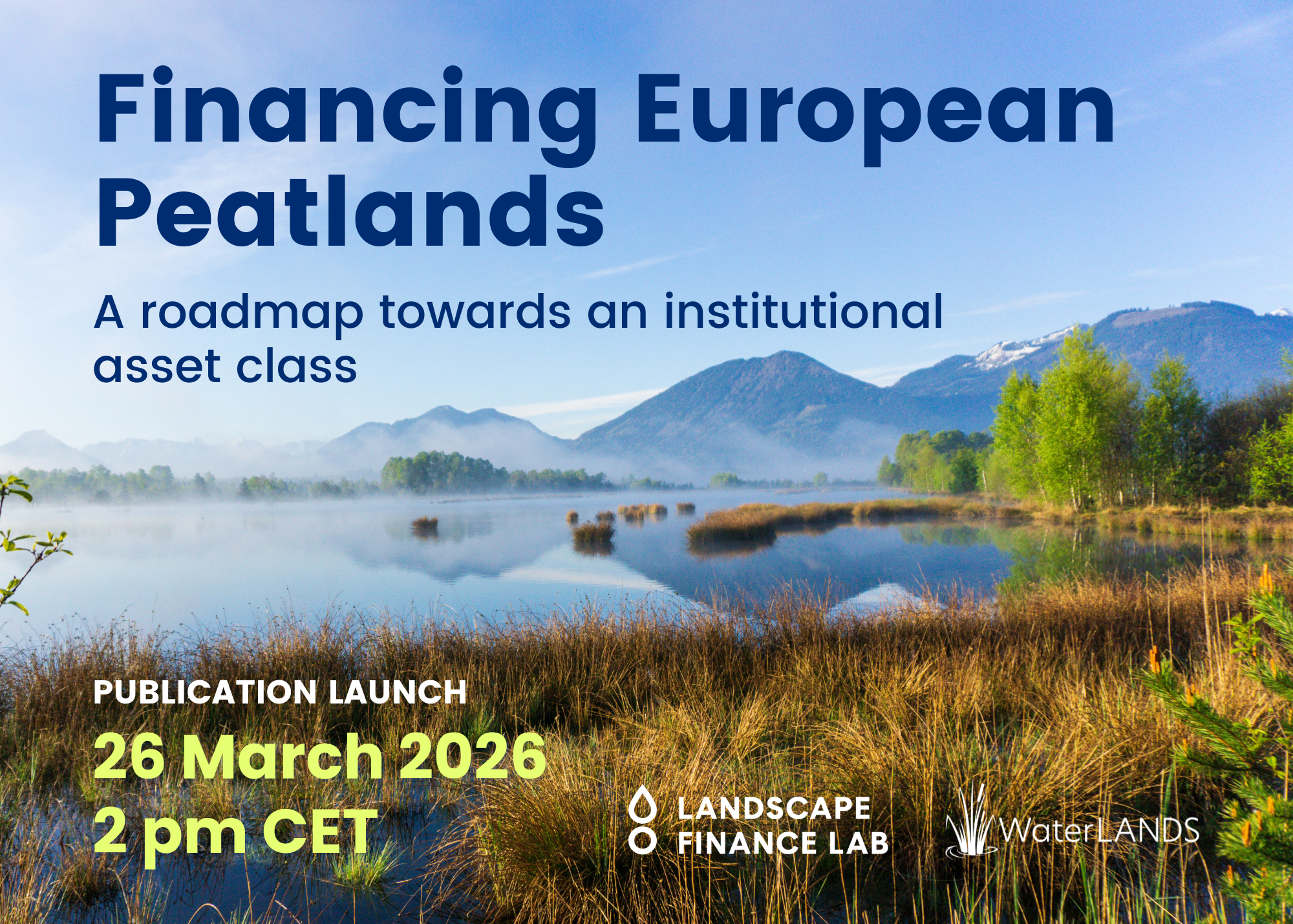
Join the Landscape Finance Lab, with partners and colleagues from across the sector, for the launch of Financing European Peatlands: A roadmap towards an institutional asset class.
This report charts a clear path forward. By diversifying and stabilising revenues across carbon, water, and biodiversity markets, aggregating projects into investible portfolios, and adopting project-finance structures familiar to infrastructure investors, Europe can unlock the billions in private capital needed for peatland restoration at scale. This report provides a practical roadmap for standards-setters, corporate buyers, developers, investors, and governments to transform Europe's degraded peatlands into bankable natural infrastructure - delivering climate mitigation, water security, and nature recovery for decades to come.